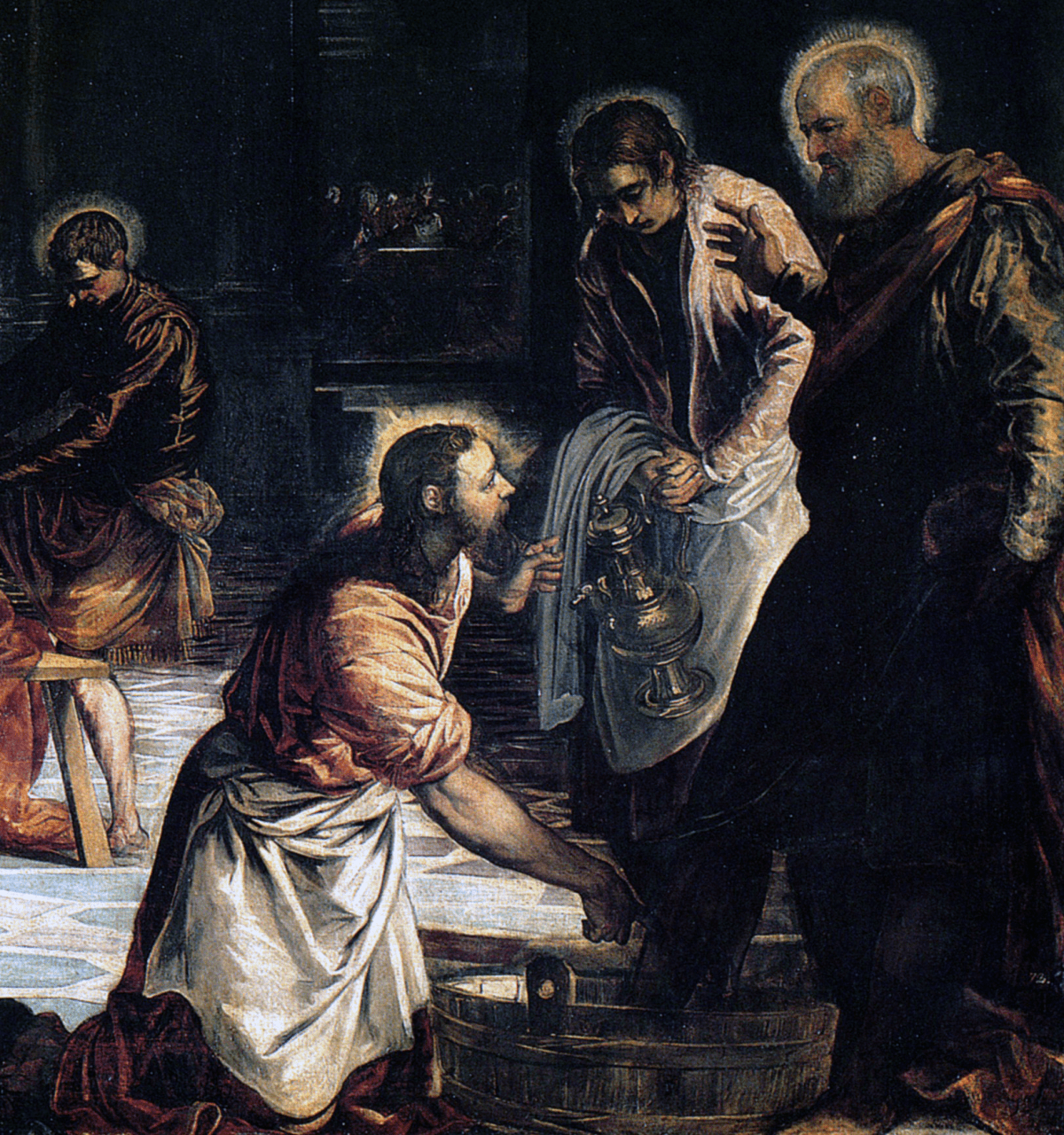
A sermon preached at Northcote Uniting Church on 17/6/26 on the text John 17:20-26
This is a sermon about love. But first, a question: Does life have a purpose? Or is it just the same old same ol’, punctuated by intervals of suffering? Scripture puts it this way:
“Meaningless! Meaningless!”
says the Teacher.
“Utterly meaningless!
Everything is meaningless.”
What do people gain from all their labours
at which they toil under the sun?
Generations come and generations go,
but the earth remains forever.
The sun rises and the sun sets,
and hurries back to where it rises.
The wind blows to the south
and turns to the north;
round and round it goes,
ever returning on its course.
All streams flow into the sea,
yet the sea is never full.
To the place the streams come from,
there they return again.
All things are wearisome,
more than one can say.
The eye never has enough of seeing,
nor the ear its fill of hearing.
What has been will be again,
what has been done will be done again;
there is nothing new under the sun.
Is there anything of which one can say,
“Look! This is something new”?
It was here already, long ago;
it was here before our time.
No one remembers the former generations,
and even those yet to come
will not be remembered
by those who follow them.
Ecclesiastes 1
Or, as we might say: work, eat, sleep, repeat, until we die.
If this is how things felt in the Ancient World, think how much more true it is in our times, when we have substituted meaning for power. In our quest to control the world, we have done our best to strip it of mystery, to break it down into the smallest imaginable pieces in order to make useful things out of it. Or, at least, things which we can sell one another.
Where there was once a sacred grove, now there is just timber waiting to be felled. Where once we thought the affairs of humanity were reflected by earthquakes and comets and portents in the heavens, we now know that celestial phenomena are completely independent of human needs or desires.
The universe does its thing, with no regard for human life, and we, poor hairless apes, do our thing for a brief moment and then expire under a pitiless sky which cannot even register our existence.
Our political and social arrangements mirror this galactic neutrality. In perhaps the most famous of all the statements of liberalism, the US declaration of independence, which draws on John Locke, says that each individual is endowed by its creator to the right to “life, liberty, and the pursuit of happiness.”
That is, it is up to each individual to not only pursue “happiness”, but it is up to each of us to decide for ourselves what happiness is. Society, we think, cannot do it for us.
This demythologizes our own lives in the same way that we have demythologised the rest of the universe. There is no “sacred canopy”, no “one right way to live.” We are each of us, in this view, little self-sufficient, self-realizing monads who aren’t going to let anyone tell us how to live or what to do, because we know what we want, and we know how to get it.
Or do we?
Given this freedom from constraint, what do we, in fact, do?
Do whatever you like, says society.
But what is it that I like?
The problem is that we don’t really understand what it means to be free. We think it means to be free from constraint, free to pursue whatever whim occurs to us – but if we pay even the slightest attention, we can see that what we want is not necessarily any good for us- as anyone who, like me, is trying to lose weight can attest. And what we want is often implanted in us from outside forces.
This has only been heightened by the emergence of “the algorithm” or “limbic capitalism” or “the machine” or whatever we want to call it. The restless scrolling through our phones for just a little endorphin buzz. Hesitating over a post for, say, running caps and suddenly your entire social media feed consists of add for caps or whatever it was you unwisely paused over. A whole system designed to grab our attention and to hold onto it, to protect us from moment’s boredom, from the disquieting thoughts like those of Ecclesiastes’ preacher a moment ago.
It turns out that life freed from constraint can get very constrained indeed.
It turns out that freedom can be its own sort of slavery.
The Taize chant we sang to begin with, when translated, has these words: “O you who are beyond all things, what mind can grasp you? All that lives celebrates you, the desire of all reaches out for you.”
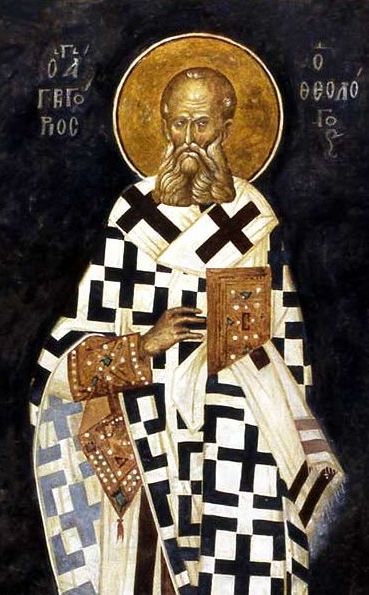
This is a quote from a fourth century theologian named St Gregory of Nanzianus, who lived in what is now central Turkey, but was then a Greek speaking province of the Byzantine Empire. He is giving voice to a basic claim of Christianity – and indeed of all theistic religions. This is that God is not just some bearded dude in the sky who doles out arbitrary instructions and threatens implausible punishments on those who annoy him.
While it is not wrong, exactly, to think of God as being like a person – more like a person than anything else we know about – it can tend to make God seem a bit, I dunno, needy. As though God wants us to praise God to fulfil some need in God. As though God were like Zeus and Apollo and all the rest of the Olympians; just sort of super-sized versions of humans. Infinitely long lived and astonishingly glamorous, but also deeply flawed.
What St Gregory is claiming here is that, as well as being kind of like a person, God is also something like the ordering principle behind all that is.
That’s the point of “all that lives celebrates you.” The whole universe was created to experience and reflect something of God. The stars do it by converting hydrogen and helium into light and heat, the Kookaburras do it with that distinctive song, gravity does it just by existing. All that exists, exists to praise God. God delights in the universe – in Genesis we see that God declares the world “very good.”
And that applies to us to, though in a more complex way, because we are more complex than stars or even Kookaburras.
The first question in the Westminster Shorter Catechism is: “what is the primary purpose of humanity?” And the answer is “to glorify God, and to enjoy God forever.” The Roman Catholic Catechism says that: “God, infinitely perfect and blessed in himself, in a plan of sheer goodness freely created humanity to make him share in God’s own blessed life.”
Or as Jesus put it, to love God with all our hearts, minds and souls.
But that presents something of a problem for us. If love means something like “treating the other how you would like to be treated yourself”, then how on earth do we do that for God? As Scripture says, “mine are the cattle on a thousand hills…if I were hungry, I would not tell you.” (Psalm 50) We can’t really give God anything that God does not already have.
However, we see what God’s love means in the life of Jesus – which is, I think, part of what Jesus is saying in this dense passage from John, when he says “in order that the love you have for me may be in them.”
How can our lives reflect the love which exists between the Father and the Son?
By doing the other bit of the commandment: By loving our neighbours as ourselves.
By being the sort of people that Paul describes in his first letter to the Corinthians
Love is patient, love is kind. It does not envy, it does not boast, it is not proud. It does not dishonor others, it is not self-seeking, it is not easily angered, it keeps no record of wrongs. Love does not delight in evil but rejoices with the truth. It always protects, always trusts, always hopes, always perseveres. Love never fails.
So, here’s the thing. We began with the Preacher’s rather downbeat assessment of human life as meaningless, and then gestured broadly at the cost of the central bargain of modernity, that assumes that everyone is a self-sufficient little monad with well known desires which it can fulfil. And we have seen what that leads to – doomscrolling late at night to keep the existential crisis at bay.
Because the central thought of modernity is that there is no sacred canopy. That we can buy and sell everything in the universe because it doesn’t mean anything. It’s all just so much raw material, waiting to be converted into marketable product.
So, you can love if you want, you can hate if you want, it doesn’t really matter. Just do you, because there is no “right” way to live. That there is no “meaning” to life, that the very question is absurd.
But the Christian claim is that life does have a meaning. It has a purpose. And that is to live in love with our neighbours, which means, in turn, to live in harmony with the deep purpose of God’s universe. To participate in the life of God in our lives here and now.
So here is the Good News. The meaning of life, then, is not some perfectly formed sentence, not some precise equation, and not something too esoteric for a non-specialist to understand. Rather, it is something all of us can do. The love that the Father has for the Son can find a home in us. And when we do that, we participate in the life of God, which is the fundamental point of the universe.
The cosmos, far from being a cold and lonely place, dominated by chance and necessity, is in fact a home, because it was created by the one who loves each of us, individually and by name, and who will never let us go.

 Alister Pate